Machine Learning Basics for Beginners
 Faizan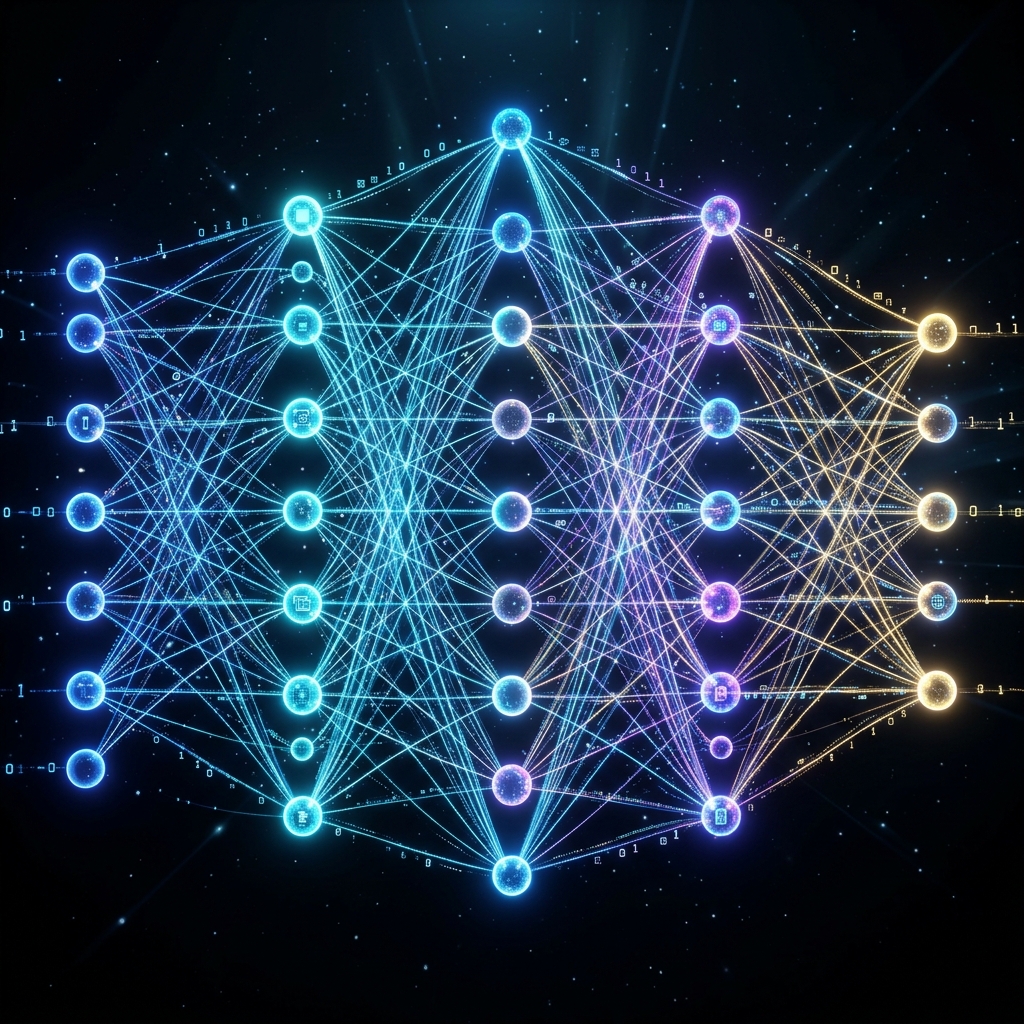
With Artificial Intelligence dominating the news cycle, terms like "Machine Learning," "Neural Networks," and "Algorithms" are thrown around constantly. For anyone outside the computer science field, it can sound like impenetrable magic. But what do these terms actually mean? How does a computer, which is fundamentally just a box of wires and silicon, actually learn something?
Let's strip away the jargon and break down the absolute basics of Machine Learning.
The Difference Between Traditional Programming and Machine Learning
To understand machine learning, it helps to first understand how traditional computer programming works.
In traditional programming, a human writes a very specific set of rules (the code). They input data into the computer, the computer applies the rules to the data, and it outputs an answer. (Data + Rules = Answer)
For example, to program a computer to identify a picture of an apple, a programmer would have to write rules like: "If the object is round, and the color is red, and it has a small brown stem on top, then it is an apple." This works okay until you show the computer a green apple, or a sliced apple. The rules fail because the real world is too complex for rigid instructions.
Machine Learning (ML) flips this entire process upside down. Instead of giving the computer rules, we give it the data AND the answers, and we ask the computer to figure out the rules for itself. (Data + Answers = Rules)
We show the computer 10,000 pictures of apples, and we tell it, "These are apples." The machine analyzes the pixels, finds the underlying mathematical patterns, and creates its own internal rulebook for what an apple looks like.
The Three Main Ways Machines Learn
There isn't just one way to teach a machine. Data scientists use different methods depending on the problem they are trying to solve. The three most common paradigms are:
1. Supervised Learning
This is the most common type. It's like a teacher showing flashcards to a student. We feed the machine a massive dataset where everything is clearly labeled. Example: We give the AI thousands of emails labeled either "Spam" or "Not Spam." The AI learns the patterns (like the frequent use of the word "Lottery" or weird formatting) and can then accurately classify new, unseen emails.
2. Unsupervised Learning
In this method, we give the AI a massive pile of data, but we don't label any of it. We just say, "Find patterns." Example: A streaming service feeds an AI millions of user listening histories without labeling what the genres are. The AI naturally clusters the data, realizing that people who listen to heavy metal rarely listen to classical piano, thereby creating highly accurate, personalized recommendation algorithms without human intervention.
3. Reinforcement Learning
This method relies on trial and error, much like training a dog with treats. The AI is placed in an environment and given a goal. If it does something that moves it closer to the goal, it gets a "reward" (a positive mathematical value). If it makes a mistake, it gets a "penalty." Over millions of rapid iterations, the AI figures out the optimal strategy. This is how AI learns to master complex video games or how autonomous robots learn to walk.
What is a Neural Network?
You'll often hear machine learning associated with "Neural Networks" or "Deep Learning." A neural network is simply a specific type of machine learning algorithm inspired by the structure of the human brain.
It consists of layers of artificial "neurons" (nodes) connected to each other. Data enters the input layer, passes through hidden layers where complex math is performed to identify features (like edges, shapes, and textures), and finally reaches an output layer that makes a prediction. When a neural network has many hidden layers, it is referred to as "Deep Learning," which is the technology powering today's most advanced AI, like ChatGPT and Midjourney.
Understanding these foundational concepts is the first step to thriving in an AI-powered world. It isn't magic; it's just very impressive math!