Understanding Agentic AI: The Shift from Passive Chatbots to Autonomous Agents in 2026
 Faizan

Artificial Intelligence has reached a pivotal evolutionary milestone in 2026. For years, users relied on conversational AI chatbots like ChatGPT and Claude to answer questions, generate text snippets, or debug short blocks of code. However, the tech landscape has fundamentally transformed with the emergence of Agentic AI.
Unlike passive language models that wait for human instructions at every step, Agentic AI systems operate with autonomy, intentionality, and long-term goal-planning capabilities. Instead of just giving you advice on how to book a flight or analyze a financial report, an Agentic AI system can plan, execute, verify, and complete complex multi-step workflows without continuous human intervention.
In this deep-dive article, we explore what Agentic AI is, how autonomous agentic architecture functions, key industry use cases in 2026, and how it impacts the future of software and business.
What Exactly is Agentic AI?
Agentic AI refers to artificial intelligence architectures designed to act as autonomous agents. Rather than operating in a simple input-output prompt cycle, agentic systems possess key characteristics:
- Autonomy & Goal Direction: You give the agent a high-level goal (e.g., "Audit our server security logs and send a summary report to Slack"), and the agent breaks down the goal into sub-tasks.
- Tool Usage & API Integration: Agents interact directly with software tools—shell terminals, databases, web browsers, and external REST APIs—to perform actions.
- Reasoning & Reflection: Modern agentic systems evaluate their own outputs. If a command fails or a script returns an error, the agent self-corrects and tries an alternative path.
- Memory & Persistence: Agents maintain long-term memory across sessions, storing learned insights, environment context, and past interaction histories.
According to research highlighted by the MIT Technology Review, the shift toward agentic systems represents the single largest architectural leap in enterprise AI since the introduction of the Transformer model in 2017.
How Agentic AI Differs from Traditional Conversational AI
To understand why this shift is revolutionary, let me compare traditional chatbots with modern agentic workflows:
| Feature | Traditional Conversational AI | Agentic AI (2026 Generation) |
|---|---|---|
| Interaction Style | Passive (Prompt & Reply) | Proactive & Autonomous |
| Task Scope | Single prompt responses | Complex multi-step projects |
| Execution | Text generation only | Executes code, calls APIs, browses web |
| Error Recovery | Requires human to re-prompt | Self-debugging & auto-reflection |
| Memory | Session-level context window | Persistent vector database memory |
If you are already familiar with AI Prompt Engineering for Beginners, you will recognize that while prompt engineering helps craft individual messages, agentic orchestration design governs how multiple prompts and tool calls chain together automatically.
The Core Components of an Agentic System
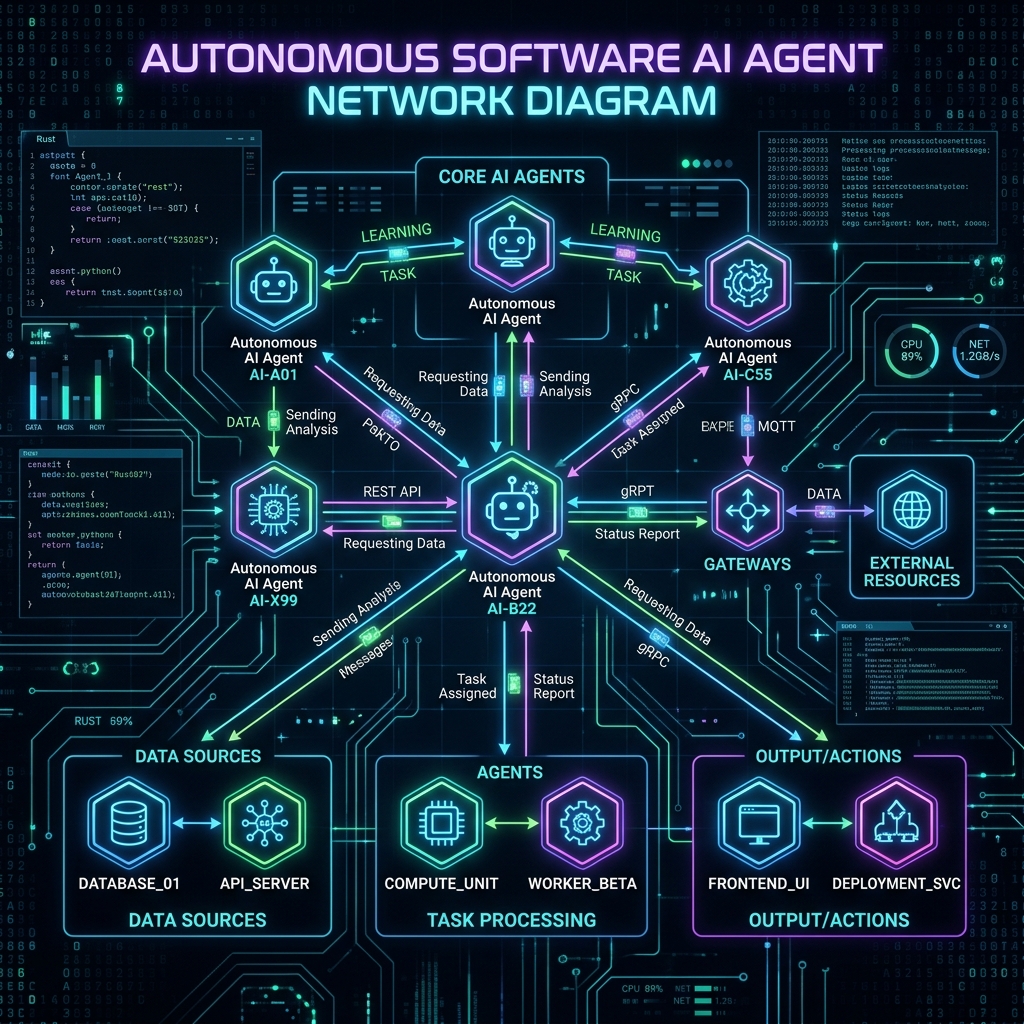
An effective Agentic AI architecture relies on four interconnected modules working in harmony:
1. The Planning Engine
When an agent receives a objective, its planner decomposes the overarching goal into a structured DAG (Directed Acyclic Graph) or step-by-step task queue. This involves:
- Sub-task decomposition.
- Priority assignment.
- Contingency planning for potential API failures.
2. Tool Integration Layer
Agents are equipped with external tools. For example, a coding agent might have access to a Git terminal, a linter, a headless browser, and a compiler. By executing actions in a real environment, the agent shifts from theoretical advice to practical outcome delivery.
3. Perception and Reflection (Looping)
After each action, the agent inspects the environment’s response. Did the code pass unit tests? Did the API return a 200 OK status? If an exception is caught, the reflection loop prompts the LLM core to analyze the stack trace and adjust its strategy.
4. Memory Architecture (Episodic & Semantic)
Agents store short-term operational state in context memory while archiving long-term patterns, documentation embeddings, and domain rules in vector databases like Pinecone or Qdrant.
Key Real-World Applications in 2026
Agentic AI is no longer a theoretical research topic; it is actively reshaping industries today:
- Automated Software Engineering: Tools like OpenAI operator models and autonomous dev agents can take a GitHub issue, locate the bug, write unit tests, fix the code, and submit a Pull Request independently. You can read more about this phenomenon in our article on AI Vibe Coding.
- Automated Enterprise Workflows: From resolving customer support tickets across multiple databases to managing supply chain logistics, agents execute routine back-office operations autonomously.
- Data Analytics & Research: Research agents crawl hundreds of scientific papers or financial filings, extract structured insights, generate statistical visualizations, and produce comprehensive executive reports.
- Cybersecurity & Threat Hunting: Security agents continuously monitor cloud infrastructure, isolate compromised containers, and attempt patch remedies in real-time.
The Challenges Facing Agentic AI
Despite rapid progress, deploying autonomous agents at scale introduces critical engineering challenges:
- Infinite Loops and Infinite Costs: Without strict budget boundaries, an agent stuck in a self-debugging loop can run thousands of API calls, leading to unexpected cloud bills.
- Safety and Guardrails: Giving AI agents authority to modify production code or execute shell scripts requires strict authorization scopes, container sandboxing, and human-in-the-loop approvals for sensitive actions.
- Hallucination Cascades: If step 1 of an agentic workflow contains a hallucination, subsequent steps may build upon erroneous assumptions, compounding errors downstream.
Preparing for the Agentic Era
As we progress through 2026, understanding how to manage, orchestrate, and collaborate with Agentic AI is becoming an essential skill for developers, managers, and entrepreneurs. Building an AI Automation Business around agentic orchestration is rapidly becoming one of the most lucrative opportunities in modern tech.
Whether you are building custom agents using open-source frameworks like AutoGen, CrewAI, or LangGraph, or leveraging turnkey agentic tools, one thing is certain: the future of AI belongs to systems that take action.
Stay tuned to our blog for more tutorials on building custom AI agents, mastering modern developer tools, and staying ahead of the AI curve!